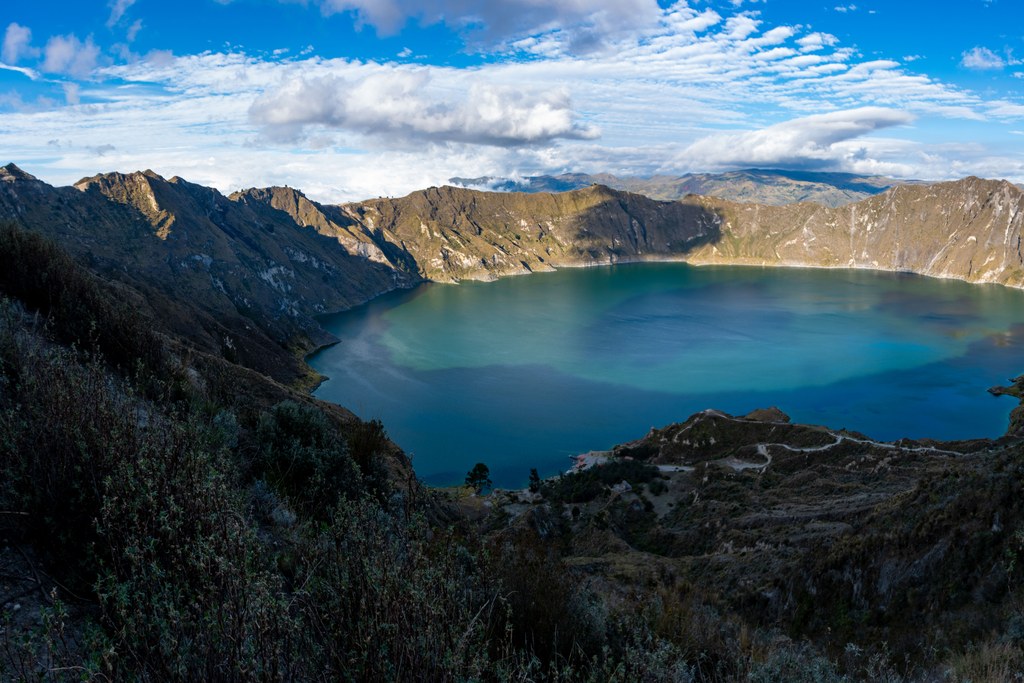
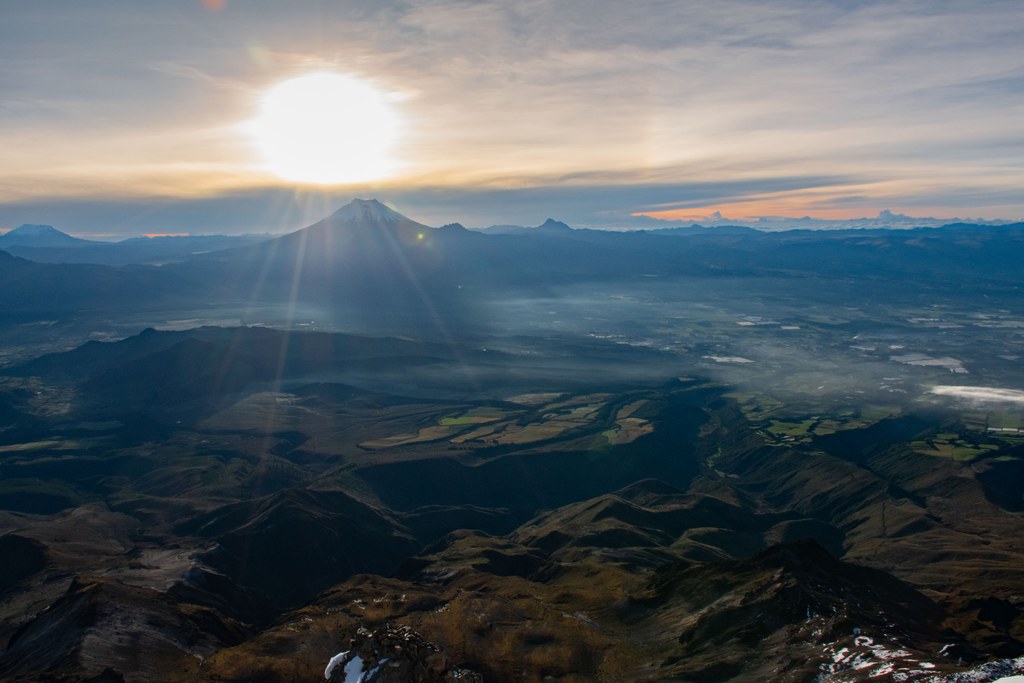
Ecuador is roughly the size of Nevada, yet it holds four entirely different worlds inside that footprint: snow-capped volcanoes, cloud forest, Amazon rainforest, a Pacific coastline, and — an hour's flight offshore — the Galápagos. Nowhere else can you trade an environment this completely without changing countries, or even spending a full day in transit.
That compression is the whole story. It's not that Ecuador has diverse landscapes — plenty of large countries do. It's that the distances between them are absurdly short, which means the culture built around each one stays distinct instead of blending into a national average. Drive four hours in almost any direction from Quito and the language on the radio, the crops in the fields, and what's on the lunch menu will all have changed.
A country the size of a state, with the range of a continent
The Andes run through Ecuador like a spine, splitting the country into what locals call the three mainland regions: the Sierra (highlands), the Costa (Pacific coast), and the Oriente (Amazon). Add the Galápagos as a fourth, and you have volcanoes over 5,000 m, tropical beaches, dense rainforest, and a living laboratory of evolution — all reachable from the same capital city.
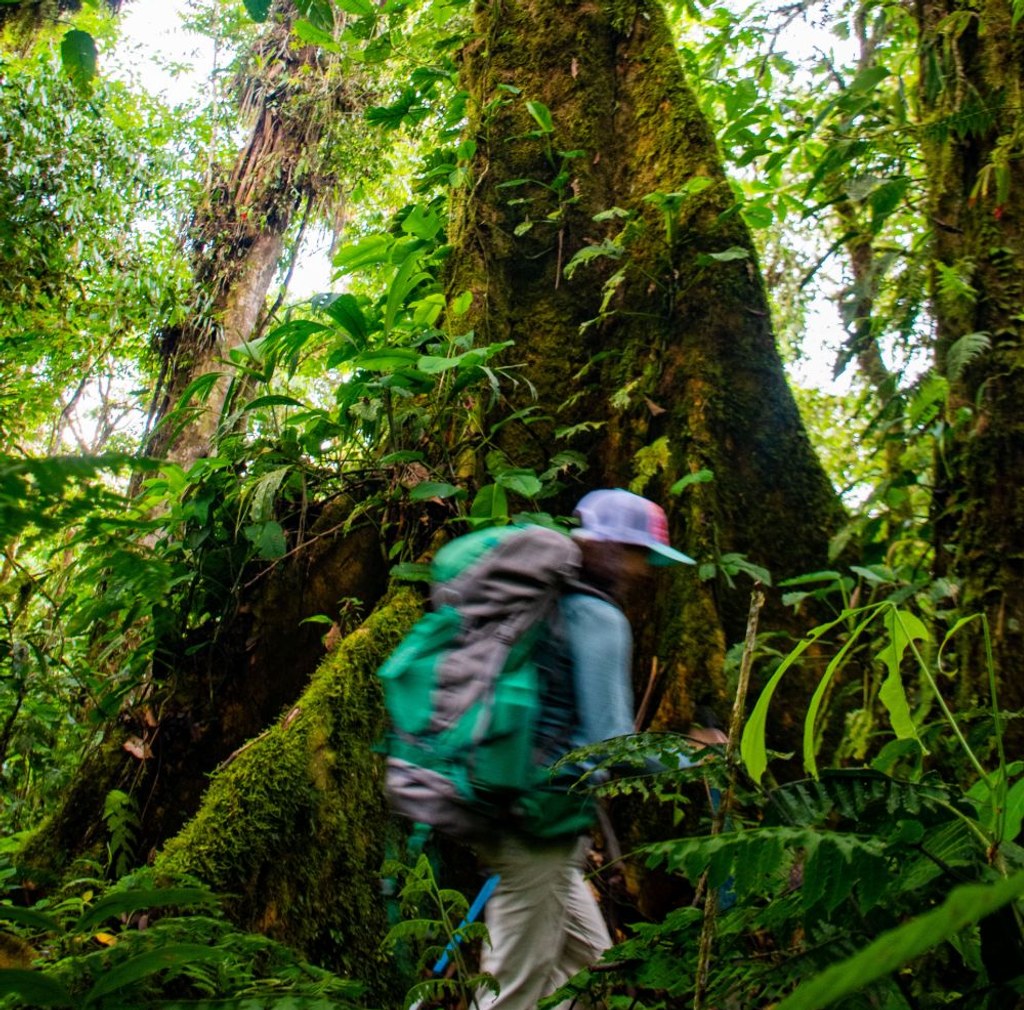
Quito itself sits at 2,850 m, which means the highlands' cold, thin light is the default. Drop two hours east off the eastern slope and you're in cloud forest thick enough to fog a lens; two hours further and it's true lowland Amazon. Head west instead and the land drops toward sea level and the Pacific in about the same time.
Short distances, drastic changes
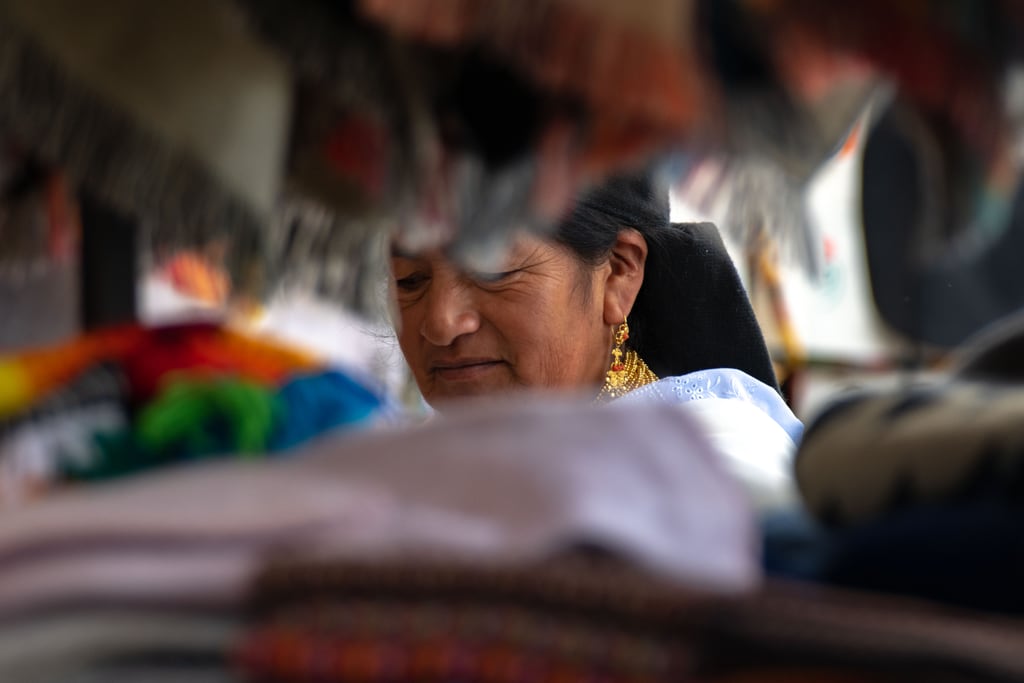
This is the part that surprises first-time visitors most: how little travel it actually takes. Cotopaxi National Park, with its wild horses and near-perfect volcanic cone, is under two hours from the airport. Otavalo's market — one of the oldest and largest indigenous markets in South America — is another hour north. The Amazon basin and its network of rivers, canopy walks and indigenous-run reserves start a few hours past that.
Because the driving is short, a single one-week trip can move through highland páramo, cloud forest, and rainforest without ever feeling rushed. That's the logic behind almost every one of our itineraries — the geography does the work of making each day feel like a different trip.
One geography, dozens of cultures
Ecuador's cultural map follows its physical one almost exactly. In the highlands, Kichwa communities around Otavalo, Cotacachi and Cotopaxi have kept weaving, market trading and agricultural traditions that go back centuries — it's why the textiles, the panpipe music and the potato-and-corn-based dishes (locro, mote, choclo con queso) feel so specific to that altitude.
Drop into the Amazon and the culture changes as fast as the climate: Kichwa Amazónico, Waorani, and several other nationalities live along the rivers, with their own languages, house-building techniques, and cuisine built around plantain, yuca and river fish wrapped in bijao leaves (maito). On the coast, Afro-Ecuadorian and Montubio communities bring an entirely different rhythm — marimba music, ceviche, and a cuisine built on coconut, plantain and the day's catch. The Galápagos, by contrast, is a young culture shaped almost entirely by conservation and a handful of founding settler families.
None of these are variations on a theme. They're distinct food systems, distinct crafts, and distinct festivals, all folded into a country you can cross by car in a day.
Why this matters behind a camera
For photographers, this compression is the whole appeal. Few places let you shoot a wild horse against a snow-capped volcano one morning and a hand-dyed textile market the next afternoon, then a hummingbird in cloud forest two days later — all without a single long-haul travel day between them. The light changes as fast as the subject does: hard equatorial sun on the coast, soft diffused overcast in the páramo, dappled green light under the Amazon canopy.
It's also why our programs are built the way they are. Volcanoes & Villages stays in the highlands and hits that range in six days; Andes & Amazon adds the rainforest; and Ecuador in Focus is the 14-day version that tries to capture all of it — Sierra, Oriente, Costa culture and the Galápagos extension — in one trip.
Final thought
Most countries ask you to choose: mountains or jungle, culture or wildlife, cities or coast. Ecuador's small size turns that into a non-question — the real skill is deciding how much of it to fit into the days you have.