Ecuador holds around 130 hummingbird species — more per square kilometer than almost anywhere on Earth — and the cloud forest feeder stations between the highlands and the Amazon slope are where photographers get consistent, close-range access. The entire craft comes down to one decision: how much of that wingbeat do you want frozen?
The wing-freeze approach: 1/2000s and up
A hummingbird's wings beat 50–80 times per second — genuinely freezing them requires shutter speeds of 1/2000s or faster, which at feeder-station light levels means either bright open shade, a flash setup, or ISO pushed higher than you'd use for most other wildlife. The reward is a technically striking image: every feather visible, the wing rendered as a sharp blur-free shape rather than a haze.
The intentional blur approach: 1/60–1/250s
Slower shutter speeds keep the body reasonably sharp — hummingbirds hover with a surprisingly stable head and torso — while letting the wings dissolve into a soft motion blur. This is often the more honest representation of what a hummingbird actually looks like to the naked eye, and it reads as more dynamic than a fully frozen frame. It's a harder shot to nail consistently, since body sharpness at that shutter speed depends on the bird staying still for a genuine hover rather than darting.
Working the feeder stations
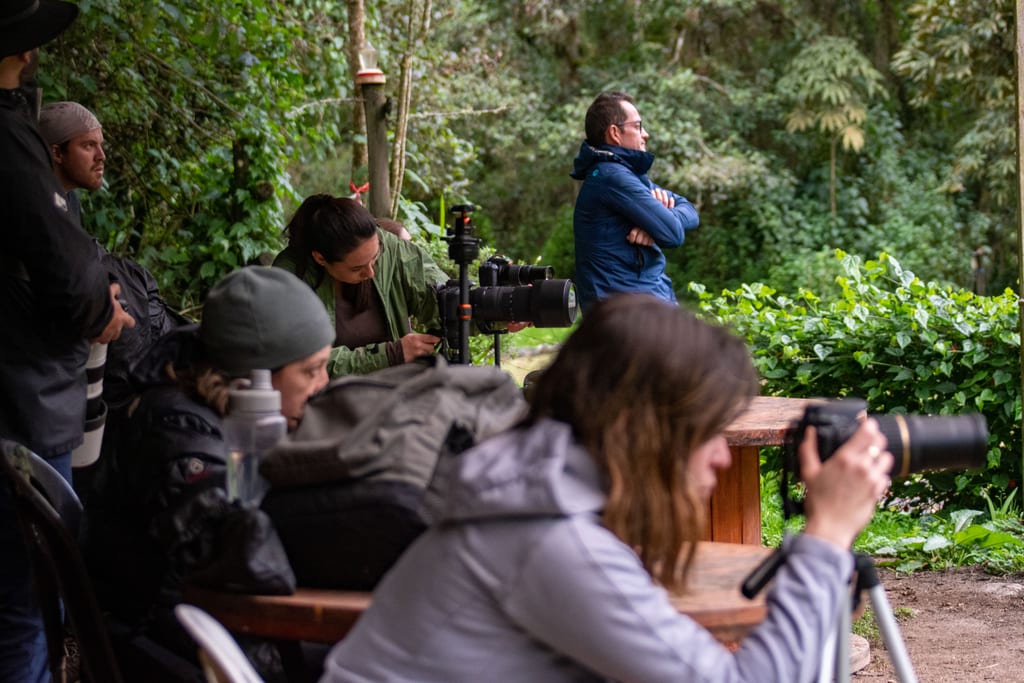
Pre-focus manually on the exact spot a bird tends to hover — most feeders have one or two favored approach angles — rather than relying on autofocus to track an erratic, fast subject. A 70–200mm at moderate distance usually outperforms getting physically closer, since hummingbirds are skittish at close range and a longer lens keeps them behaving naturally.
Final thought
There's no universally "correct" shutter speed for hummingbirds — there's the frozen-detail version and the honest-motion version, and the best portfolios usually have both.